What Is a Webhook, and How Is It Different From an API? (In Plain English)
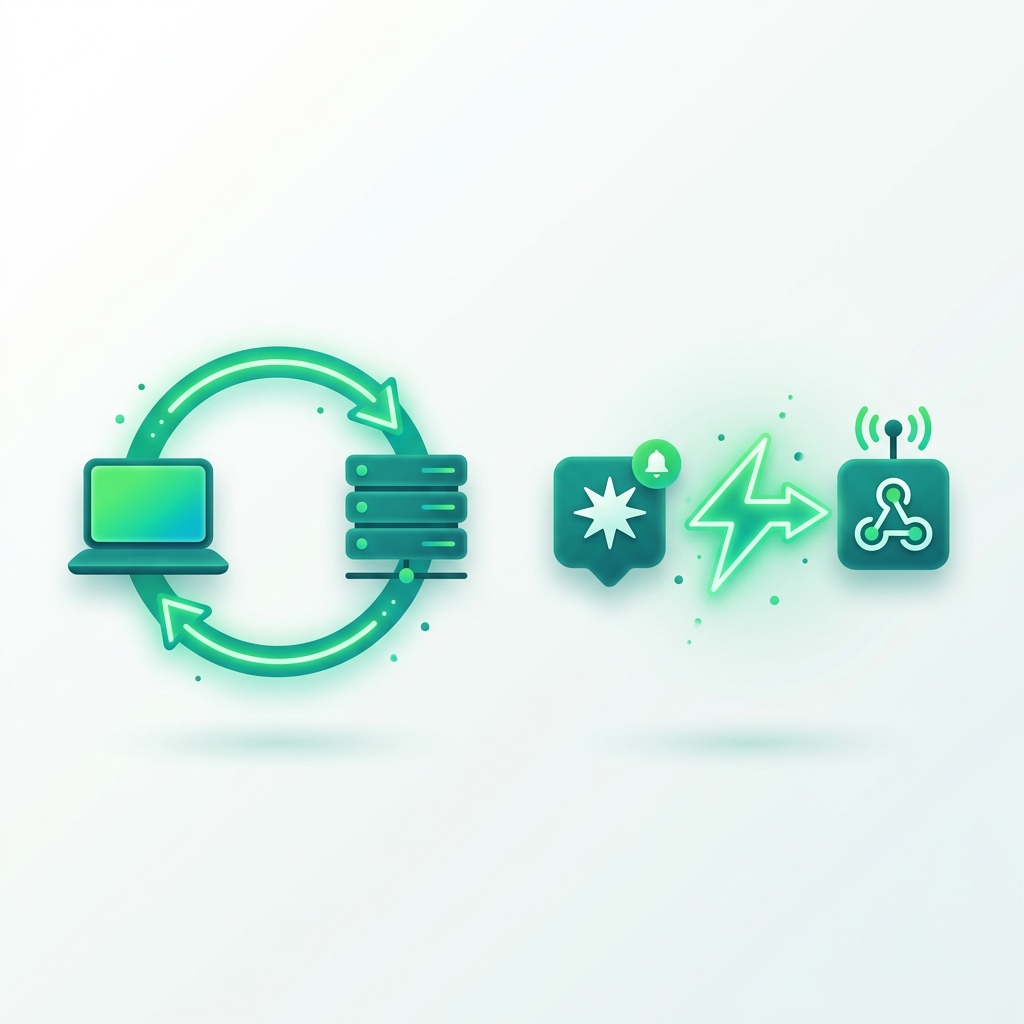
Sending a message is only half the story. The other half is knowing what happened next — was it delivered, read, replied to? — and being able to act on it in real time. That's what webhooks do. Instead of your systems constantly polling for status, icpaas.ai pushes each event to your endpoint the moment it occurs: delivery receipts, read markers, inbound replies and button taps all arrive as clean, signed payloads.
This unlocks genuinely two-way experiences. When a customer replies "STOP", your system can suppress them instantly. When they tap "Track order" on an RCS card, you can fire the tracking flow. When a WhatsApp message is read but not answered, you can schedule a nudge. Webhooks are the nervous system that connects your CRM, helpdesk, ERP or custom app to the conversation.
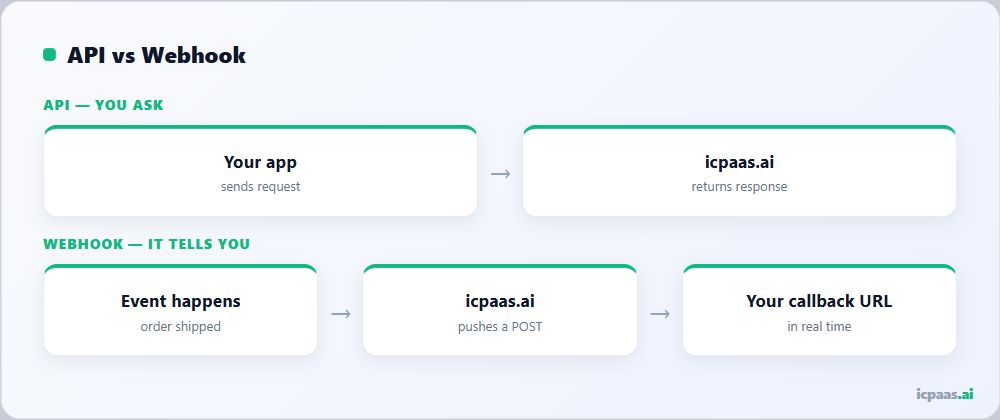
Because reliability is critical, the icpaas.ai webhook engine is built for production: signed requests so you can verify authenticity, event filtering so you only receive what you care about, and automatic retries so nothing is lost if your endpoint is briefly unavailable. Every event is logged, giving you a complete, auditable trail.
You don't even need a custom server to consume them. Point an icpaas.ai webhook at a Zapier, Pabbly Connect or n8n webhook trigger and every delivery, read or inbound reply can kick off a downstream action — update a sheet, create a ticket, notify a channel — while your team stays in the tools they already use.
One caution that matters in production: because a webhook is an open URL on the public internet, you must verify that each call genuinely came from your provider. icpaas.ai signs every webhook with an HMAC signature so your endpoint can reject spoofed requests, and it retries with backoff if your server is briefly down — so a momentary blip doesn't cost you a delivery receipt or an inbound reply. Treat your webhook like an API of your own: validate the signature, respond quickly with a 200, and process the payload asynchronously.
For teams, this is the difference between broadcasting and engaging. Delivery analytics become real-time dashboards; support queues auto-populate from inbound messages; and marketing journeys branch on actual customer behaviour. Webhooks are how a messaging channel becomes a customer-experience platform.
Ready to Get Started?
Learn how our platform can help you implement these best practices across all your messaging channels.
Related Articles

Integration
Native CRM Integrations: Streamline Your Workflow
Connect your CPaaS messaging platform directly with Salesforce, HubSpot, and other CRMs for unified customer data, automated campaigns, and seamless omnichannel workflows.
Read More →
Integration
What Is a Messaging API, and How Do You Send SMS, WhatsApp & RCS From One Place?
A single, well-documented REST API to send SMS, WhatsApp, RCS and voice from your own applications — no telecom contracts, no fragmented vendors.
Read More →
Integration
How Do You Add SMS, OTP and WhatsApp to Your App? A Developer's Guide (REST, SMPP & SDKs)
Clean REST endpoints, SMPP for high-volume traffic, drop-in OTP verification, sandbox testing and SDKs — everything a developer needs to ship messaging in hours, not weeks.
Read More →Want to Learn More?
Explore our comprehensive platform and see how we can transform your customer communication strategy.